
City, Ripley Power and Light Participate in Pilot Project
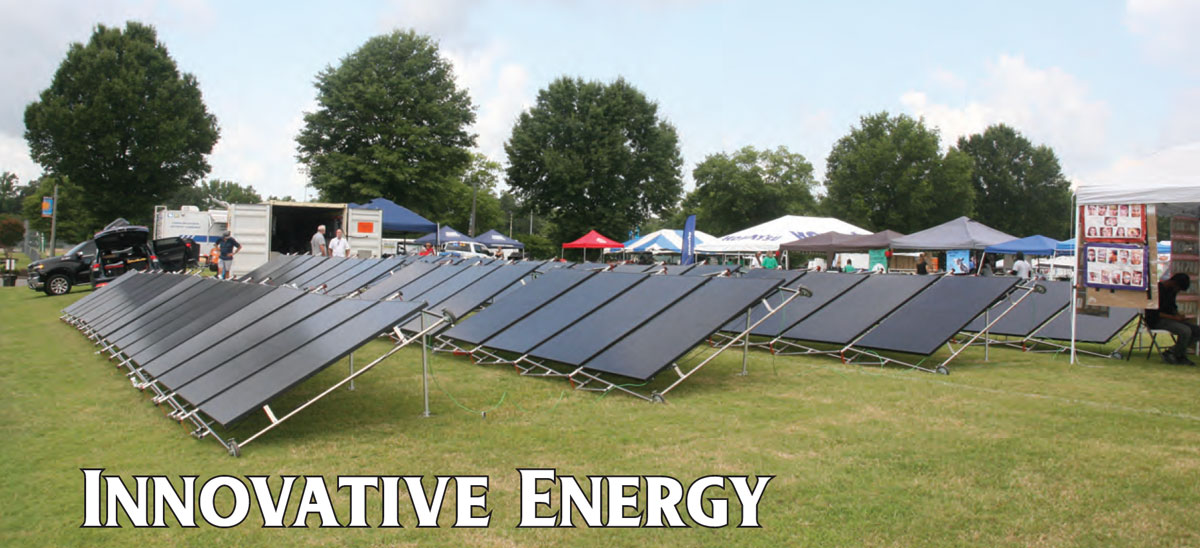
A portable, solar-powered microgrid system will be ready to provide electricity in Ripley should an emergency occur.
It is part of a pilot project to provide backup power for emergency services and a cost-effective, emissions-free power source for nonemergency situations. The microgrid can operate around the clock without needing fuel.
Instead, it operates on a battery that is powered by the sun.
Tennessee Valley Authority, which helped pay for the city’s innovative microgrid system, is one of five players in a unique partnership that brought the microgrid to Ripley, said Ben Colgrove, director of research and development at the National Institute for Hometown Security (NIHS).
“We were looking for a partner in a rural community,” Colgrove said. Then he met Ripley Mayor Craig Fitzhugh at a conference organized by the Tennessee Advanced Energy Business Council.
NIHS designs technical projects that benefit critical infrastructure, Colgrove explained. The key players in Ripley’s microgrid project are the City of Ripley, which was willing to participate in the project; the nonprofit NIHS; Resilience Energy and Infrastructure, a private company that manufactured the microgrid; and Ripley Power and Light Company, which enables the microgrid to integrate with the city’s electric grid.
With partnerships like this,” Colgrove said, “you can accomplish so much more.”
The microgrid system can provide enough power for the critical loads of community buildings, such as Ripley Fire Department and Ripley Elementary School. Since it’s portable, it can be taken to where it is needed in the community.
Another result of the partnership was cutting-edge, battery- fire response training for the Ripley, Dyersburg, Covington and Brownsville fire departments in November, Colgrove said.
The installation of the microgrid will be completed sometime in January, Colgrove said. For the next six months, his organization will evaluate the effectiveness of a small community’s use of a mobile microgrid in emergencies, identify opportunities for how the microgrid can be used as a clean power source in non-emergencies, and measure the decreased need for fossil fuel-based generators by small communities during emergencies.
“We’ll learn from it,” Colgrove said. “We’re learning how a small community can use it so we can take the technology to other communities.”
A Naming Contest
Since Ripley Elementary School is one of the buildings that is being integrated into the microgrid system, the students there were asked to suggest names for the microgrid system.
“They came up with four very creative and original names,” said Ben Colgrove, director of research and development at NIHS.
Attendees at the Tomato Festival voted on their favorite name. The winner: The Ripley TigerVolt!